

Lessons
Free
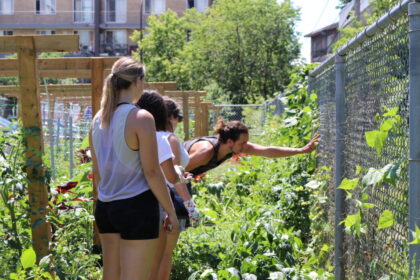
Loyola Farm Tour
Related Courses
Free
Free
Free
Free

Term: Fall 2025
Credits: 3
Class time: Wednesday and Friday – 2:45 – 4 PM
Classroom: FG B040 SGW
Office Hours: Wednesday – 4:15 – 5:30 PM (by request)
I acknowledge that Concordia University is located on unceded Indigenous lands. The Kanien’kehá:ka Nation is recognized as the custodians of the lands and waters on which we gather today. Tiohtiá:ke/Montreal is historically known as a gathering place for many First Nations. Today, it is home to a diverse population of Indigenous and other peoples. We respect the continued connections with the past, present and future in our ongoing relationships with Indigenous and other peoples within the Montreal community. (Indigenous Directions Leadership Group, Feb. 16, 2017) This course focuses on food and culture from decolonial, social justice perspectives. Students are encouraged to read the Red Paper on Land Back and/or take the short course on Land Back from the Yellowhead Institute.
This course examines the history and practice of producing food in cities. Students will explore the tensions between the politics, economies and ecologies that organize urban food production and the everyday ways people raise and access food in varied urban contexts. The course also critically evaluates food‑based social movements: their limits, possibilities and connections to wider struggles for socio‑economic justice.
Learning Outcomes
This course will be given in person. Each class will begin with a short lecture and discussion led by Erik Chevrier, Ph.D. and/or Hala Chaoui (assistant teacher). They will introduce themes, provide additional examples and/or offer critical perspectives related to the weekly topics but not covered in the readings. The course will also include a variety of pedagogical styles, including lectures, discussions, guest speakers (possibly), field trips (maybe), community service learning and/or experiential learning. Students are expected to read the required texts before class and engage with each other through interactive activities and critical discussions.
This course takes a critical look at how urban agroecology can support food-sovereign urban communities. Students will examine food systems through multiple lenses, analyzing the ecological impacts of industrial agriculture—such as biodiversity loss, disrupted carbon cycles, water overuse, and pollution—alongside social and economic issues including food insecurity, rising food costs, reliance on migrant farm labour, and the challenges faced by small- and medium-scale farms.
Alongside this critical inquiry, the course emphasizes practical approaches to building campus–community food sovereignty. Students will explore strategies for creating resilient urban food systems and gain hands-on experience by participating in local urban farms and gardens.
The course begins with an overview of theoretical perspectives, including food systems analysis, diverse economies, and ecological complexity. It then shifts to the practical work of designing, growing, and maintaining urban farms and gardens. In the final weeks, students will resituate this knowledge within broader discussions of land, seeds, and urban planning, before concluding with lessons on harvest preservation and a collective food festival.
Assignments are designed to bridge theory and practice. Students will engage with critical food theory, collaborate with community-based urban agriculture initiatives, and reflect on their experiences in the field.
Course Schedule and Required Readings | |||
Week | Date | Description | Assignments and/or Readings Due |
1 | Sept 3 & 5 | Introduction to Urban Agroecology and Course | Tornaghi, C. Dehaene, D. (2021)Resourcing an Agroecological Urbanism Political, Transformational and Territorial Dimensions |
2 | Sept 10 & 12 | Examples of Urban Agroecology: Loyola Farm Tours | Egerer, M., Cohen, H. (2020) Urban Agroecology Interdisciplinary Research and Future Directions |
3 | Sept 17 & 19 | Critical Overview of Food Systems | Egerer, M., Cohen, H. (2020) Urban Agroecology Interdisciplinary Research and Future Directions Chapter 9 – Co-Producing Agro-Food Policies for Urban Environments: Toward Agroecology-Based Local Agri-food Systems Tornaghi, C. Dehaene, D. (2021)Resourcing an Agroecological Urbanism Political, Transformational and Territorial Dimensions Chapter 8 – The Transformative Potential of Agroecological Farmers: An analysis of participatory food system strategies in Nicaragua and England |
4 | Sept 24 & 26 | Diverse Economies of Agroecology | Tornaghi, C. Dehaene, D. (2021)Resourcing an Agroecological Urbanism Political, Transformational and Territorial Dimensions Chapter 3 – Commons and Commoning for a Just Agroecological Transition: The importance of de-colonising and de-commodifying our food systems Chapter 7 – The Potential of Bio-Intensive Market Gardening Models for a Transformative Urban griculture: Adapting SPIN Farming to Brussels Chapter 9 – Conjugating Social and Solidarity Economies in Chiapas Mexico: Redesigning food systems for economic, social, and ecological virtuous circles |
5 | Oct 1 & 3 | Agroecology and Ecological Complexity and Biodiversity | Egerer, M., Cohen, H. (2020) Urban Agroecology Interdisciplinary Research and Future Directions Chapter 1 – An Expanded Scope of Biodiversity in Urban Agriculture, with Implications for Conservation Chapter 2 – Complex Ecological Interactions and Ecosystem Services in Urban Agroecosystems Chapter 3 – Climate Factors and Climate Change in Urban Agroecosystems |
6 | Oct 8 & 10 | Healthy Soil | Tornaghi, C. Dehaene, D. (2021)Resourcing an Agroecological Urbanism Political, Transformational and Territorial Dimensions Chapter 6 – Soils, Industrialized Cities and Contaminants: Challenges for an agroecological urbanism Egerer, M., Cohen, H. (2020) Urban Agroecology Interdisciplinary Research and Future Directions Chapter 4 – Restoring Soil and Supporting Food Sovereignty across Urban–Rural Landscapes: An Interdisciplinary Perspective |
| Oct 15 & 17 | Mid-Term Break – No Classes |
|
7 | Oct 22 & 24 | Annual Food Production
| Various Chapters of: Carpenter, N., and Rosenthal, W. (2011) The Essential Urban Farmer, Penguin Books. |
8 | Oct 29 & 31 | Perennial Food Production | Various Chapters of: Carpenter, N., and Rosenthal, W. (2011) The Essential Urban Farmer, Penguin Books. |
9 | Nov 5 & 7 | Urban Permaculture | Gaia’s Garden: A Guide to Home-Scale Permaculture Chapter 1 – Introducing the Ecological Garden Chapter 2 – A Gardener’s Ecology |
10 | Nov 12 & 14 | Urban Food Planning | Various Chapters of: Integrated Urban Agriculture: Precedents, Practices, Prospects Chapter 4 – Designing Urban Agriculture Forms: History, Education, Proposals and Projects Chapter 5 – Urban Agriculture Linkages, Patterns, Education and Urban Planning Chapter 6 – Resilient Cities = Carrot City: Urban Agriculture Theories and Designs Chapter 7 – Agricultural Urbanism: Building Sustainable Urban and Regional Food Systems for 21st Century Cities |
11 | Nov 19 & 21 | Seeds, Land and Food Sovereignty | Egerer, M., Cohen, H. (2020) Urban Agroecology Interdisciplinary Research and Future Directions Chapter 7 – From Individual Seeds to Collective Harvests: Urban Agroecology as Political Action Chapter 8 – Surveying the Landscape of Urban Agriculture’s Land Politics: Civic, Ecological, Heritage-Based, Justice-Driven, and Market-Oriented Fields |
12 | Nov 26 – 28 | Food Preservation and Festival | Tornaghi, C. Dehaene, D. (2021)Resourcing an Agroecological Urbanism Political, Transformational and Territorial Dimensions Conclusion – The programmatic dimension of an agroecological urbanism |
The participation grade is based on attendance, engagement in class discussions, and active involvement in hands-on food activities and supplemental tasks. Students are expected to attend class regularly, contribute thoughtfully to discussions, and demonstrate familiarity with the assigned readings. Participation reflects students’ ability to engage critically and collaboratively with course materials, peers, and experiential activities.
Students will write two blogs (600–1000 words each) on topics related to urban agriculture discussed in lectures and/or course readings. The first blog must address critical perspectives in urban agriculture, while the second will focus on building sovereign/sustainable urban foodscapes. Although written in a blog format, posts must be grounded in research rather than personal opinion. To receive an A, submissions must reference at least eight credible sources and integrate required course readings. Students with production skills may substitute a video or podcast, pending approval from Erik Chevrier.
For the final project, students will collaborate with a campus–community initiative to strengthen local foodscapes. They may work with projects Erik is directly involved in (e.g., CultivAction Solidarity Cooperative, Lachine Farms) or partner with another urban agriculture initiative in their community. Each student will contribute 10 volunteer hours over the semester, gaining hands-on experience and learning directly from practitioners.
In addition to their fieldwork, students will write a critical self-reflection that connects their volunteer experience with course concepts, allowing them to analyze both the challenges and possibilities of urban agroecology in practice.
Name of Assignment | Due Date | % of final grade |
Participation | Ongoing | 15 |
Blog 1 (Critical Perspectives in Urban Agriculture) | October 10 | 30 |
Blog 2 (Building Food Sovereign Campus-Communities through Urban Agroecology) | November 19 | 30 |
Experiential Learning Reflection | December 5 | 25 |
More information on university regulations concerning evaluation can be found here. The grading system is described in section 16.1.11 of the Undergraduate Calendar.
Please note that for 200-level courses, instructors in the Department of Geography, Planning and Environment reserve the right to adjust the final reported grades so that under normal circumstances no more than 25% of students registered in a course receive an outstanding grade (A-, A, A+).
A+ | 95 – 100 | B+ | 80 – 84.9 | C+ | 67 – 69.9 | D+ | 57 – 59.9 | F | 0 – 49 |
A | 90 – 94.9 | B | 75 – 79.9 | C | 63 – 66.9 | D | 53 – 56.9 | NR | No report |
A- | 85 – 89.9 | B- | 70 – 74.9 | C- | 60 – 62.9 | D- | 50 – 52.9 |
In the event of extraordinary circumstances and pursuant to the Academic Regulations, the University may modify the delivery, content, structure, forum, location and/or evaluation scheme. In the event of such extraordinary circumstances, students will be informed of the changes.
Classes are officially considered cancelled if an instructor is 15 minutes late for a 50-minute class, 20 minutes late for a 75-minute class, or 30 minutes late for longer classes.
Content belonging to instructors shared in online courses, including, but not limited to, online lectures, course notes, and video recordings of classes remain the intellectual property of the faculty member. It may not be distributed, published or broadcast, in whole or in part, without the express permission of the faculty member. Students are also forbidden to use their own means of recording any elements of an online class or lecture without express permission of the instructor. Any unauthorized sharing of course content may constitute a breach of the Academic Code of Conduct and/or the Code of Rights and Responsibilities. As specified in the Policy on Intellectual Property, the University does not claim any ownership of or interest in any student IP. All university members retain copyright over their work.
All individuals participating in courses are expected to be professional and constructive throughout the course, including in their communications.
Concordia students are subject to the Code of Rights and Responsibilities which applies both when students are physically and virtually engaged in any University activity, including classes, seminars, meetings, etc. Students engaged in University activities must respect this Code when engaging with any members of the Concordia community, including faculty, staff, and students, whether such interactions are verbal or in writing, face to face or online/virtual. Failing to comply with the Code may result in charges and sanctions, as outlined in the Code.
Academic integrity means that every student must be honest and accurate in their work. The Academic Code of Conduct includes rules and regulations students must follow. Unacceptable practices include the following
PLAGIARISM: The most common offense under the Academic Code of Conduct (see link below) is plagiarism, which the Code defines as “the presentation of the work of another person as one’s own or without proper acknowledgement.”
This could be material copied word for word from books, journals, internet sites, professor’s course notes, etc. It could be material that is paraphrased but closely resembles the original source. It could be the work of a fellow student, such as an answer on a quiz, data for a lab report, or a paper or assignment completed by another student. It could be a paper purchased through one of the many available sources. Plagiarism does not refer to words alone. It can also refer to copying images, graphs, tables, and ideas. Plagiarism is not limited to written work. It also applies to oral presentations, computer assignments and artistic works. Finally, if you translate the work of another person into French or English and do not cite the source, this is also plagiarism. In simple words: DO NOT COPY, PARAPHRASE OR TRANSLATE ANYTHING FROM ANYWHERE WITHOUT SAYING FROM WHERE YOU OBTAINED IT!
Take care to inform yourself of the rules, regulations and expectations for academic integrity.