
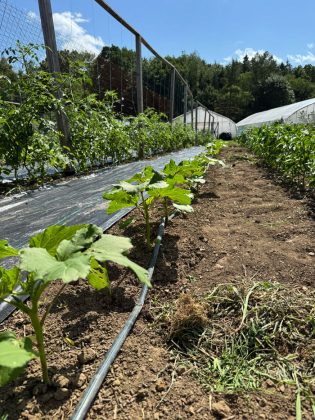
Related Courses
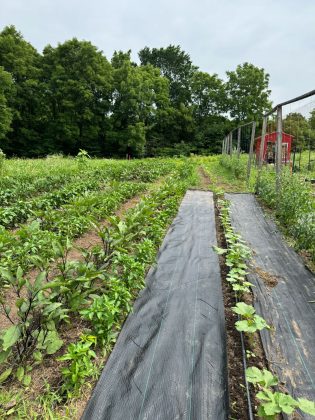
Free

Free

Free
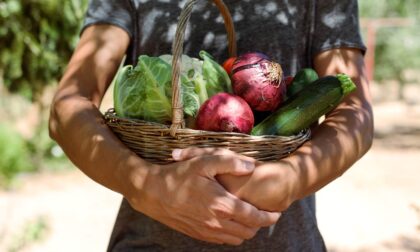
Free

Instructor: Erik Chevrier, Ph.D.
Term: Fall 2026
Class time: Monday: 5:30 PM – 8:30 PM
Classroom: Hamilton, Room 151
Office Hours: Monday: 3:30 PM – 5:00 PM (by request)
Office Location: JOH122
K’wlipaï8ba W8banakiak wdakiw8k. Bishop’s University is located on the traditional territory of the Abenaki people (the people of the rising sun). We acknowledge their stewardship and appreciate that we are all guests on Abenaki territory. This course focuses on sustainable foodscapes from transformative, decolonial, social justice perspectives. Students are encouraged to read the Red Paper on Land Back by the Yellowhead Institute.
Foodscapes are diverse and unique social-ecological systems that reflect local biophysical, cultural and socioeconomic conditions. As such, they can be studied using a combination of approaches from the broad fields of geography and environmental sciences. This course will introduce students to a diversity of methods and approaches to study foodscapes, rooted in both the natural and the social sciences.
Research can do more than describe food systems. It can create opportunities for researchers and communities to learn from one another, build knowledge together, better understand their foodscapes, and explore what communities value, what they want to strengthen, and what they may want to transform. Throughout the course, we will approach research as a collaborative process to critically examine the conditions and relationships that shape foodscapes and explore how research can support community-led efforts toward more sustainable, equitable, and food-sovereign futures.
Students will examine different ways of understanding food systems and foodscapes, critically consider how knowledge is produced and whose knowledge informs research, and gain practical experience with qualitative, quantitative, ecological, systems-based, and participatory research methods. We will consider what different approaches allow us to know, whose perspectives they include or exclude, and how the choices researchers make shape both the knowledge they produce and its possibilities for contributing to change.
Students will explore these topics through a collaborative research project connected to Bishop’s University’s Educational Farm. The project will explore possibilities for strengthening connections between the Educational Farm, the Bishop’s community, and surrounding communities, with the aim of identifying how these relationships could create social, ecological, educational, and food-system benefits. In particular, students will consider how greater community participation in food production, distribution, access, and decision-making could help create conditions that support campus-community food sovereignty.
The project will be guided by questions such as: How can the Educational Farm become more connected to the Bishop’s community and surrounding communities? What social, ecological, educational, and food-system benefits could these connections create? How might greater participation in the campus food system contribute to conditions that support campus-community food sovereignty? What opportunities, challenges, and tensions should be considered in strengthening these relationships?
Students will draw on research about campus food systems, interview people involved with campus farms and related initiatives, analyze interview data, and participate in a World Café focused primarily on the Bishop’s community, including students and faculty in Sustainable Agriculture and other interested parties. Together, these activities will allow students to learn from experiences at other campuses while creating opportunities for members of the Bishop’s community to share their perspectives, experiences, priorities, and ideas.
The collective project will follow the research design and procedures established through the research ethics process. Within these parameters, students will participate in different stages of the research process, including refining questions, conducting interviews, interpreting findings, and planning and facilitating the World Café.
Alongside the collective project, each student will develop an individual research proposal on a sustainable foodscape of their choice, providing an opportunity to apply the approaches explored throughout the course to a research question that matters to them.
By the end of this course, students will be able to:
Date | Topic | Readings | Class Activities |
Sept. 14 | Introduction to the Course | No readings | 1 – Get to know one another and introduce AGR 260. 2 – Discuss students’ interests in sustainable food systems, foodscapes, and research. 3 – Introduce the individual assignments and the collective research project. |
Sept. 21 | Introduction to Research on Sustainable Food Systems | The Routledge Handbook of Sustainable and Regenerative Food Systems Chapter 1 – Regenerating Food Systems: A Social-Ecological Approach | 1 – Discuss different approaches to sustainable food systems, food sovereignty, and knowledge. 2 – Explore how the Educational Farm could create benefits within the Bishop’s community and strengthen connections with surrounding communities. 3 – Introduce the collective research project and the questions guiding it. 4 – Discuss consent form and recruitment procedures. 5 – Bishop’s Library workshop: 7:30–8:30. |
Sept. 28 | Forming Research Questions and Designing SES Research | The Routledge Handbook of Research Methods for Social-Ecological Systems Chapter 2 – Complexity-Based Social-Ecological Systems Research: Philosophical Foundations and Practical Implications
Chapter 3 – The Practice and Design of Social-Ecological Systems Research | 1 – Discuss the readings. 2 – Develop preliminary research questions for individual projects and share them with classmates for feedback. 3 – Review the approved direction of the collective project and identify questions or perspectives that can be explored within the research ethics framework. 4 – Connect research questions to literature, research design, and the kinds of knowledge a study can produce. 5 – Guest lecture from Michael Classens about campus farms 6 – Apply for ethical approval. |
Oct. 5 | Election: No class | Dale, B., Morrison, J., Aoun, M., Bardati, D., & Downing (2026) Cultivating Education, Research and Community Outreach: Reflections from Bishop’s University on Food Systems Change, In, Classens, M., Spiegelaar, N., and Lawler, M. (Eds.) (In production). Hungry for change: How Postsecondary Campuses are Transforming Food Systems. University of Toronto Press. | Independent work on the literature review and background research for the collective research project. |
Oct. 12 | Reading Week: No class | No readings | No class. |
Oct. 19 | Taking a Critical, Transformative Approach to Knowledge and Research | Food Sovereignty, Agroecology, and Biocultural Diversity: Constructing and Contesting Knowledge Chapter 8 – Democratizing Knowledge and Ways of Knowing A Knowledge Creation Framework for Academia Toward Agroecological Transformations of Food Systems Agroecology Now! Transformations Towards More Just and Sustainable Food Systems | 1 – Discuss the readings through a jigsaw activity and compare different understandings of knowledge, power, and transformation. 2 – Consider whose knowledge should inform the collective research project and how people can participate in producing knowledge. 3 – Revisit individual research questions and discuss how assumptions and ways of knowing shape research. |
Oct. 26 | Research Methods for Studying Foodscapes | The Routledge Handbook of Research Methods for Social-Ecological Systems Methods for Data Generation and Systems Scoping Chapter 5 – 9 | 1 – Explore the research methods presented in the readings through a jigsaw activity. 2 – Compare what different methods allow researchers to observe, measure, and understand. 3 – Review and prepare to use the approved campus-farm interview approach for the collective project. 4 – Workshop methods that could be appropriate for students’ individual research proposals. |
Nov. 2 | Participatory Methods: Knowledge Co-Production and Systems Change | The Routledge Handbook of Research Methods for Social-Ecological Systems Methods for Knowledge Co-Production and Effecting System Change | 1 – Discuss participatory research, knowledge co-production, action research, and research ethics through a jigsaw activity. 2 – Prepare for campus-farm interviews, including informed consent, confidentiality, respectful engagement, and responsible data management. 3 – Introduce the World Café and begin planning participation and questions within the approved research framework. 4 – Discuss and justify methods for individual research proposals. |
Nov. 9 | Analyzing and Interpreting Research Findings | The Routledge Handbook of Research Methods for Social-Ecological Systems Methods for Analyzing Systems – System Components and Linkages Chapter 18 – 20 | 1 – Introduce qualitative and quantitative approaches to data analysis. 2 – Practice coding, categorizing, comparing, and interpreting sample data. 3 – Discuss the difference between data, findings, analysis, and interpretation. 4 – Prepare for the collective analysis workshop. |
Before Nov. 16 | Campus-Farm Interviews Completed | No readings | Students complete their assigned campus-farm interviews so the class has a complete dataset for the November 16 analysis workshop. |
Nov. 16 | Analyzing and Interpreting Campus-Farm Interview Data | The Routledge Handbook of Research Methods for Social-Ecological Systems Methods for Analysing Systems – System Components and Linkages Chapter 18 – 20 | 1 – Work together to analyze the campus-farm interview data. 2 – Identify and compare themes, patterns, differences, and tensions across the interviews. 3 – Discuss different interpretations of the findings and the limitations of the data. 4 – Identify findings and questions that can help inform the World Café while keeping the interview and World Café datasets distinct. |
Nov. 23 | Knowledge Co-Production and the Bishop’s World Café | 1 – Connect the campus-farm interview findings and course readings to questions for the World Café. 2 – Finalize World Café questions and facilitation roles. 3 – Hold the Bishop’s campus-community World Café, focused primarily on students and faculty in Sustainable Agriculture and other members of the Bishop’s community, with others invited to participate. 4 – Document the ideas, experiences, priorities, agreements, differences, and possibilities raised by participants. | |
Nov. 30 | Sustainable Food-System Transformation | 1 – Discuss Kimmerer and reconnect the course to food sovereignty, relationships, responsibility, and food-system transformation. 2 – Discuss the World Café as a separate source of knowledge from the campus-farm interviews. 3 – Consider what the collective research suggests about how the Educational Farm could create positive outcomes within the Bishop’s community and strengthen relationships with surrounding communities. 4 – Workshop final individual research proposals and discuss their potential contributions. | |
Dec. 7 | Final Presentations | No readings | 1 – Present individual research proposals and receive feedback from classmates. 2 – Reflect on the collective research project and what research can contribute to sustainable and food-sovereign communities. 3 – Share food together in a class potluck and celebrate the work completed during the course. |
Name of Assignment | Due Date | % of Final Grade |
Participation and Reflection | Ongoing | 10% |
Literature Review and Research Question | October 9 | 20% |
Research Design, Methods and Rationale | November 9 | 20% |
Analysis and Discussion of Campus-Farm Interview Data | November 30 | 20% |
Action-Research Summary and Reflection | December 7 | 10% |
Final Research Proposal | December 18 | 20% |
Total | 100% |
Participation is based on attendance, engagement in class discussions, and active involvement in hands-on activities and other course tasks. Students are expected to attend class regularly, contribute thoughtfully to discussions, and engage critically and collaboratively with course materials, peers, and experiential activities.
Students must complete their selected readings before class and come prepared to discuss them critically. At the beginning of each class, students will submit brief handwritten reading notes or a reflection identifying ideas, questions, connections, or points they would like to discuss.
Students will choose a research topic related to sustainable foodscapes and develop a research question for an individual proposed study. They will review relevant research, scholarship, and other credible sources of knowledge to establish the context for their research, synthesize existing knowledge, identify an area for further investigation, and explain how the literature informs their research question.
Students are encouraged to consider different sources and forms of knowledge relevant to their topic. These may include academic research, Indigenous knowledge and publications, community-based research, government and organizational reports, and other appropriate sources. Students should critically consider the relevance, credibility, context, and limitations of the sources they use. This assignment will form the foundation of the final research proposal.
Building on their literature review and research question, students will develop an appropriate research design for their proposed study. They will describe the methods they would use to collect data and explain why these methods are appropriate for answering their research question.
The assignment should demonstrate a clear relationship between the research question, research design, chosen methods, and the kinds of knowledge those methods can produce. Students should also consider the assumptions, limitations, and relationships involved in producing that knowledge. This work will become the methods section of the final research proposal.
As part of the collaborative campus-community research project, students will help conduct interviews with people involved in campus farms and related initiatives. The class will work together to analyze a selection of the interview data and identify important themes, patterns, similarities, and differences.
Students will then individually write an analysis and discussion of the findings. They will use evidence from the interviews to explain the patterns they identified, interpret what the findings mean, and connect their interpretation to relevant literature and course concepts. Students should also consider differences or tensions within the data, limitations of the research, and the significance of the findings for understanding campus-community food systems and food sovereignty. The World Café will be treated as a separate source of data and is not part of this assignment.
Throughout the semester, students will participate in the collaborative campus-community research project. Students will contribute to campus-farm interviews, collaborative analysis of the interview data, and the development and facilitation of a World Café.
For this assignment, students will briefly summarize what they learned from their part of the collective project, including important ideas, tensions, questions, or possibilities that emerged from the World Café. They will then write a short autoethnographic reflection considering their own experience and position within the research process.
Students are encouraged to reflect on the assumptions they brought to the project, what changed or challenged their thinking, how relationships shaped the research process, and what they learned about knowledge, collaboration, participatory research, or food sovereignty.
Students will develop a final research proposal for studying a sustainable foodscape. The proposal will bring together and revise work completed in the Literature Review and Research Question and Research Design, Methods and Rationale assignments.
The final proposal should establish the research problem and its significance, synthesize relevant knowledge and literature, present clear research questions, and explain and justify an appropriate research design and methods. Students will also explain how they would recruit participants or select data sources, collect and analyze data, and manage and securely store research materials. Drawing on the kinds of questions addressed in a research ethics application, students will identify potential risks or harms associated with the research and explain how these would be minimized. Where relevant, they should address informed consent, privacy, confidentiality, data storage and retention, relationships with participants or communities, and potential benefits of the research.
Students are not expected to conduct the proposed research or produce hypothetical results. They are expected to use feedback from earlier assignments to substantially revise and integrate their work into a coherent proposal rather than simply combine previously submitted assignments. The goal is to design a coherent, ethical, and feasible research project and discuss how it could contribute to understanding or transforming sustainable food systems.
Letter Grade | Percentage | Letter Grade | Percentage | Letter Grade | Percentage |
A+ | 90–100 | B+ | 77–79.9 | C+ | 67–69.9 |
A | 85–89.9 | B | 73–76.9 | C | 63–66.9 |
A− | 80–84.9 | B− | 70–72.9 | C− | 60–62.9 |
D+ | 57–59.9 | D | 53–56.9 | D− | 50–52.9 |
F | 0–49.9 |
Moodle is the primary learning platform for AGR 260. Course announcements, readings, assignment instructions, submissions, grades, and other official course communications and materials will be provided through Moodle. Students should check Moodle regularly throughout the semester.
The instructor’s course website complements Moodle by providing lesson materials and additional resources that support the topics and activities explored in class:
AGR 260 – Methods for Studying Sustainable Foodscapes
The course website is intended as an instructional resource. Students do not need to register, create an account, or provide personal information to access it. Assignments, grades, personal information, and other student records will remain within Bishop’s approved systems and will not be stored on the course website.
Assignments must be submitted by the due date and in the format I specify. Unless otherwise indicated, assignments should be submitted in hard copy during class.
Late assignments will receive a 15% deduction and will be accepted for up to one week after the due date. After one week, assignments will not be accepted.
I understand that circumstances sometimes arise that make it difficult to meet a deadline. Students who anticipate needing additional time should contact me at least one week before the assignment is due to discuss an extension. Exceptions may also be made in cases of medical or personal emergencies.
Students are expected to conduct their academic work honestly and responsibly. Academic misconduct includes plagiarism, cheating, unauthorized collaboration, fabrication of data or references, unauthorized use of materials, and other practices that provide an unfair academic advantage.
Students are responsible for properly acknowledging the ideas, words, data, images, and other work of others. This applies to academic publications as well as other materials and sources used in assignments.
Students should familiarize themselves with Bishop’s University’s Academic Calendar and University Regulations, which include the University’s regulations concerning academic integrity. Students are encouraged to ask the instructor if they are uncertain about appropriate citation, collaboration, use of sources, or other questions related to academic integrity.
Generative artificial intelligence (AI) raises significant social, ethical, and environmental concerns. These include its energy and resource use, environmental impacts, privacy and surveillance risks, bias and misinformation, the appropriation of intellectual and creative labour, growing concentrations of technological and economic power, and the potential for AI to contribute to existing inequalities in wealth and access to resources. Its use also raises important questions about how knowledge is produced, whose knowledge is represented, and who benefits from these technologies.
AI tools are increasingly being incorporated into research practices, including transcription, organizing and synthesizing information, and assisting with some forms of data analysis. We will approach these tools critically in this course and consider both what they can do and the social, ecological, economic, and epistemological consequences of using them.
AI may be used as a supportive tool, but it must not replace students’ own research, thinking, analysis, interpretation, or writing. Students may not use AI to generate an assignment or substantive sections of an assignment, conduct analysis in place of their own analysis, generate personal reflections, invent sources or citations, fabricate or alter research data, or present AI-generated work as their own.
Students are responsible for the accuracy, integrity, and quality of everything they submit, including work developed with the assistance of AI.
Every submitted assignment must end with a brief statement indicating whether AI was used and, if so, how it was used. For example: “I used [tool] to help organize my notes and identify grammatical errors.” If no AI was used, students should state: “I did not use generative AI in preparing this assignment.”
Students must not upload interview recordings, transcripts, identifying information, unpublished research data, or other confidential materials from the collective research project to generative AI systems unless explicitly authorized by the instructor.
If students are unsure whether a particular use of AI is appropriate, they should ask the instructor before using it.
Our classroom is a space for discussion, critical inquiry, collaboration, and respectful disagreement. Students are encouraged to question ideas, readings, research methods, and one another’s interpretations while engaging respectfully with their classmates and the wider Bishop’s community.
Students are expected to follow Bishop’s University’s Student Rights and Responsibilities and Code of Student Conduct in their interactions in class, online, and during course-related activities.
This course includes collaborative research activities involving members of Bishop’s University and other campus communities. Students are expected to approach interviews, the World Café, and other research activities respectfully and responsibly.
Information shared by research participants must be handled according to the procedures established for the class research project. Students should not independently distribute interview recordings, transcripts, identifying information, or other research materials outside the course.
If a class must be cancelled, students will be informed as early as possible through their Bishop’s email and/or the course learning platform. Any necessary changes to course activities, instruction, or scheduling will be communicated to students.
Students are responsible for regularly checking their Bishop’s email and course communications for important information related to the course.
Bishop’s University is committed to providing equitable access to education. Students who require academic accommodations are encouraged to contact Student Accessibility Services (SAS).
Students registered with SAS are encouraged to communicate their approved accommodations to the instructor so that they can be appropriately implemented in the course. Information about eligibility, registration, classroom and examination accommodations is available through Student Accessibility Services.
University can sometimes involve academic, personal, financial, or other challenges. Bishop’s offers a range of services to support students, including academic support, counselling and health services, accessibility services, peer support, Indigenous student support, international student services, and other resources.
Students are encouraged to make use of these services when they would be helpful. A good starting point is Bishop’s University Student Services or the Current Students portal.
Students are encouraged to speak with the instructor if they have questions about course material, assignments, feedback, or their progress in the course.
Bishop’s also provides Academic Support, including academic advising, the Writing Centre, tutoring, and research support through the Library Learning Commons.
Students seeking independent and impartial assistance with an academic decision, University policy, or other University-related concern may also contact the University Ombuds Office through the Academic Support page.
Academic Calendar and University Regulations
Student Rights and Responsibilities
Code of Student Conduct
Bishop’s University Policies
Student Services
Student Accessibility Services (SAS)
Academic Support, Writing Centre and Tutoring
Library Learning Commons
Counselling and Mental Health Services
Health Services
Indigenous Student Success Centre
Bishop’s International
Sexual Violence Support Centre
BUnited Peer Support Centre
University Ombuds Office